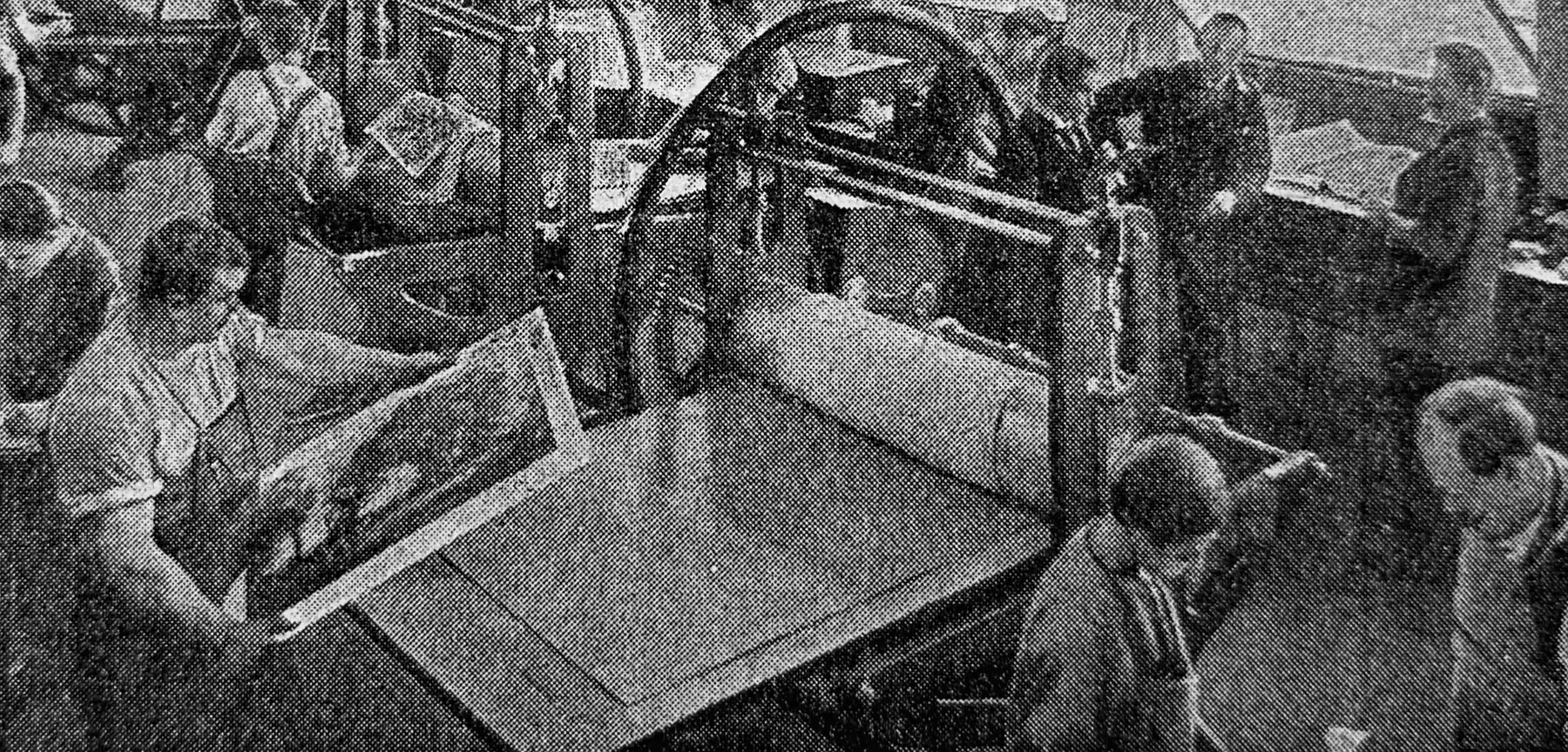
An engraving of a 19th-century works floor: people at the presses, a man looking over a print.

SolutionsBy industry

Manufacturing

Quotes, orders and the paperwork around them, with every step on record.

Agents take the configuring, the matching and the re-keying. Your engineers, planners and sellers keep the judgment.

All built on ithara®. All code yours to keep.

Let's talk

What we see

In manufacturers, in the plant and the front office.

A made-to-order quote waits for days, because the bill of materials is built by hand.

The ERP knows what was ordered. What was promised lives in email.

The people who know the product rules are near retirement, and the rules are written nowhere.

Certificates and inspection reports sit in folders nobody has time to read.

In production

A published result, with its numbers and what the people do now.

Success story · Quoting and bills of materials

A lighting manufacturer cut quote turnaround by 83% and made every quote auditable

From 90 minutes of manual work across four systems to about 15 minutes, end to end.

What the people do now. Inside sales works from one flow instead of four systems. Nothing posts to the ERP or CRM unapproved.

Read the story
83%reduction in quote turnaround time
40%increase in quoting capacity
60%fewer entry errors and revision cycles

Across quoting and bill-of-materials creation

Agents

One task each, with your experts in charge. The first is in production. For the others we say what we aim for.

Quoting and bills of materials

The problem

A made-to-order quote means reading the request, configuring the product, building the bill of materials and pricing it, across four systems.

What we build

One flow that reads the request, builds the bill of materials and prepares the quote, with every step on record.

Your experts

Inside sales reviews and sends. Nothing posts to the ERP or CRM unapproved.

In production
About 15 minutesFor a quote, down from 90
One flowInstead of four systems
Every quoteAuditable

Order entry and change orders

The problem

Purchase orders arrive as documents and emails. People key them into the ERP, and every change order starts the keying again.

What we build

An agent that reads the order, checks it against the quote and the product rules, and prepares the entry for the ERP. A mismatch stops and goes to a person.

Your experts

Customer service handles the mismatches and the customer. Nothing posts unapproved.

What we aim for
Entered onceEvery order
Every mismatchStopped for a person
Quote to orderConnected

Supplier documents and quality records

The problem

Certificates, inspection reports and supplier paperwork arrive in every format, and are checked by hand or not at all.

What we build

An agent that reads each document, checks it against the specification and files it with its part and lot. A gap goes to a quality engineer.

Your experts

Quality engineers decide on the exceptions and deal with the supplier.

What we aim for
Every documentRead and checked
Each gapTo a quality engineer
The trailKept with the lot
Modernize · below the waterline

Get the product rules out of people’s heads.

A manufacturer’s advantage is what it knows about its own products. In most plants that knowledge is hard for software to reach:

  • Configuration and price rules known to a few experts
  • An ERP customized over twenty years
  • Engineering, sales and production each keeping their own part data
  • Spreadsheets that plan what the ERP cannot
What we build
Product rules, written and signed

Each rule traced, agreed with the people who know it, and kept where software can use it.

One record of parts and products

Engineering, sales and production working from the same data, in your cloud.

The old customizations, traced

What the ERP was changed to do, rule by rule, before anything is rebuilt.

Planning tools that fit

Software built for how your plant works, which you own.

Evergreen · after any build

Products, prices and models all change.

A quoting agent that was right in March can be wrong by June:

  • New products, options and price lists
  • Engineering changes that alter the bill of materials
  • Changes to the ERP and the CRM it works through
  • Models that are retired and replaced
What we build
Rules kept in step

A new price list or product rule goes through the record, signed by the person who owns it.

Checks that keep running

Each agent is tested against its requirements after every change.

What your people send back

Every correction is read, and the cause is fixed.

Model changes, proven first

Before a model is swapped, the agent’s proofs are run again on the new one.

Start with one task you can name.

Just a conversation about what you're building. No forms that ask for your budget range. No sales screening process.

Write to us